
• Start a TER check
  • Register theft


Equipment Registration
Stolen Equipment Registration
TER Check
Stolen Equipment Recovery Operations
Services For The Police & Law Enforcement Agencies
Equipment Sales
Crime Reduction Advice


JCB 535-125 telescopic handler.  Stolen on 31st May 2006 from Bescar, South Yorkshire.  Recovered on 5th October 2007 from Northern Ireland.

Caterpillar 301.5 telescopic handler.  Stolen on 17th July 2007 from Wickford,Essex.  Recovered in Moerdijk, Holland on the 25th September 2007.


Click here for further information on TER registration.


Ausa 100AHA Dumper stolen from Halifax recovered in Rochdale, Lancashire.

4x Bobcat S300 and 2x Bobcat T300 skid steers.  All stolen between 2006 and 2007 from Ilinois, USA.  Recovered in October 2007 from Lithuania.


JCB JS200L Excavator found on a demolition sight in North Tynside.

Merlo P32.7 Telescopic Handler stolen from Dorset, recovered in Somerset.

7 Mini Diggers recovered from a lorry in Hertfordshire

Indespension Trailer stolen 2003 from Hampshire, recovered 2006.


JCB Mini Excavators stolen in Essex and recovered at Dover.


TER Check Certificate. Click here for further information


Material available for the police and law enforcement agencies.

Click here to download our loss provention advice.


JCB 530 Telescopic Handler stolen from Woodford Green, Greater London, recovered in Welshpool, Wales.

Hitachi EX60LCK-3 Excavator stolen from Surrey in 2002 and recovered in Yorkshire at auction in 2007.

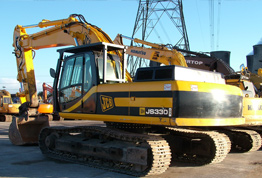
JCB JS330 Excavator stolen from Lanley, Thames Valley and recovered at auction the same year.

TER assisting the Police on a vehicle check operation. 

Kubota KX36 Excavator stolen from Greater Manchester and recovered in Halifax, West Yorkshire 3 months later.

Manitou MT1637SL Telescopic Handler stolen from Leystone, Greater London, recovered Co. Kildare, Southern Ireland.

JCB 802.4 Mini Excavator stolen in Knutton, Straffordshire, recovered in Derbyshire two years later.

Ifor Williams HB510R Horsebox recovered in Clayton, Greater Manchester.

Back to Top


TER’s Services

Many of TER’s services are free, particularly for the police and law enforcement, and sometimes for TER subscribers. 

  • Provision of statistics and data on equipment theft issues
  • Stolen equipment registration
  • Cleansing of plant and equipment data entered onto the Motor Insurer’s Anti-Fraud and Theft Register (MIAFTR)
  • Crime reduction advice for owners and users of plant and equipment
  • Checking equipment identification data against the TER database prior to a manufacturer issuing a replacement identification plate
  • Assist manufacturers with the investigation of suspicious queries
  • Police and law enforcement agency services, which include:
    • Provision of Specialist Plant Investigators anywhere in UK or NI.  TER Investigators have also deployed through Europe and the Middle East in support of law enforcement agencies
    • 24/7 access to TER’s expertise and data over the phone
    • Equipment identification data e.g. TER provides Plant & Equipment Identification Guides
    • Briefings on the Nature and Extent of Equipment Theft in the UK
    • Equipment identification training
    • Intelligence
    • Investigation
    • Checking plant and equipment data for PNC Bureaux prior to entry onto the PNC
    • Cleansing PNC Plant File data
    • Provision of monitored tracking device for covert ops
    • Crime reduction advice

EQUIPMENT REGISTRATION

What is it?  The logging of equipment fleet and owner details on TER’s database.

What data is required?  Type, make, model, serial/chassis/VIN numbers, Registration number, engine number, owner/company name, address, tel/fax, 24 hr contact number.

Who does it? 

  1. Major equipment manufacturers, such as JCB, Caterpillar, Kubota, Liebherr, Manitou and Ifor Williams, register their new and used sales data with TER as a service to their clients.  Ownership data is only disclosed to the police and law enforcement agencies and then only on a case by case basis where they need the data.
  2. Companies register their fleets with TER.  Their names are listed on TER’s website.
  3. Finally, banks and finance companies register their interest in plant and equipment against which they have loaned monies or where they remain the title holder.

Why do it?   

  1. So that equipment fleet data is available to the police to check 24/7 to allow the police to monitor the movement of equipment on the national roads network and through ports.
  2. In addition, TER can make matches when the equipment is passing through auctions. 
  3. Companies registering their equipment can also access premium discount benefits offered by their insurers, who recognise that TER Registration is effective risk management.  Some insurers will not cover a ‘risk’ unless they are registered with TER.
  4. The provision of the equipment fleet data to TER also allows TER to check that none of the equipment is stolen, to assess the total value of the fleet and, where agreed, to pass this data to the Subscriber’s insurer.

How does it work?  Potential subscribers register with TER by downloading the Registration Agreement from TER’s website, entering their details and sending it to TER with appropriate payment.  TER issues them with their Subscriber Number, the Subscriber downloads a spreadsheet from TER’s website, enters their fleet data and emails the spreadsheet to TER, remembering to keep their fleet data held by TER up to date as they buy and sell.

How much owned equipment data has TER got registered?  Approaching 1,000,000 owned items valued at around £3.4BN. 

STOLEN EQUIPMENT REGISTRATION (free service)

What is it?  Tell TER the identification details of any stolen plant and equipment valued at more than £1,500, along with the owner and, if relevant, hirer details, with the police crime details, and which insurance company is on cover and their claims reference number.  The data can be registered using a paper Theft Registration Form which can be faxed or posted to TER, or via the TER website.

Then what happens?  TER will log the theft on the TER database.  If the theft is a higher value on (excess of £15-20,000) and it has been reported to TER within 24 hrs of theft, TER will circulate its details to all police forces and ports.

Who registers stolen data with TER?  Owners and users of equipment.  Police officers taking details of the crime.  Insurance brokers, insurance company claims departments and their loss adjusters.  The Motor Insurer’s Anti Fraud and Theft Register (MIAFTR).  The Police National Computer (PNC).

What does TER do with the data?  First we check it to make sure that the equipment identification details are accurate.  If they are not, we go back to the supplier and find out the right data or additional data, such as a Crime Reference Number.  With the bulk data that we get from the PNC and MIAFTR we have to cleanse the data before entering it into our database.  In an average month we cleanse around 200 higher value police equipment theft records from the PNC.  On average we have to discard 30-40% of the data as we cannot correct it because the data on the PNC is simply wrong.  Typically, 75% of the rest of the data requires some sort of amendment which can vary from the misspelling of a name or incorrect model data through to mis-entry of partially correct data.  What this means is that more than 60% of the data on the PNC Plant File will never give an officer the result that he should get when he is standing in front of a stolen machine

Why register thefts? 

  1. It enhances your opportunities of recovering the stolen item by making the data available to the police 24/7.  However, recovery rates are still very low principally because equipment theft is not a police priority.  Less than 5% of stolen equipment is ever recovered. 
  2. Registering theft data also allows TER to spot frauds, e.g. where a company has made an insurance claim for a theft and then sold the item.
  3. And, it provides data against which potential purchasers, insurers and auctions can check before they buy, insure or sell equipment which hinders the criminal’s ability to dispose of stolen equipment.

How much data is registered?  A total of more than 100,000 equipment thefts are registered.  Over 48,000 thefts have been reported by insurers, with the balance being PNC data from the police.  We assess that at any one time there is around £200M of stolen equipment on TER’s database.

TER CHECK

What is it?  A TER Check is a check made against TER (and other) databases to see if the equipment being enquired about is registered as stolen or on finance.  There are two types of TER Check.  The Trade Check is made against TER’s database only.  The Premium Check is a Trade Check combined with a wider search against other databases, and a finance check.  Terms and conditions of the TER Check can be seen on TER’s website.

Who uses it?  Plant hire companies, contractors, auctions, dealers, individuals, insurers and banks.  The Trade Check is used by parties already using another service to provide finance checks.  The Premium Check is generally used by one off purchasers and some dealers who do not regularly use a finance checking service.

Why should you check?  There are a number of reasons. 

  • You cannot buy good title to stolen property, no matter how many hands it has been through.  This is the principle that no one can give better title than he himself has, embodied in the maxim nemo dat quod non habet which was supported by a House of Lords ruling on 21st April 1988 in the case National Employers Mutual General Insurance Association Limited v Jones
  • If you purchased the equipment for less than the market value and at a later date it is identified as stolen, the police may treat you as a handler of stolen goods.  In other words, the reason why the deal is too good to be true is because it is not true and the equipment is stolen.  Time after time we have seen greed replace common sense in otherwise normal people
  • Equipment theft funds a range of serious organised criminality and even terrorism, much of which could affect you, your family and your community either directly or indirectly
  • It could harm your reputation, as a dealer or auction, if you are found trading in stolen equipment, even if you purchased it innocently
  • If your company has a Corporate and Social Responsibility statement, how can it possibly be acceptable for your company to purchase, sell, finance or insure stolen plant and equipment? 

What information does TER need to make a Check?  All your details including your name, company and contact details.  As many equipment details as possible, but key are the make, model, and identification data.  Then, the details of the current owner and where the equipment is physically.  And finally, your credit card details.  We always recommend that you are standing next to the equipment when you call TER in case there are any queries about the equipment identification data, or the equipment turns out to be stolen.

The TER check may not identify 'cloned' or 'ringed' vehicles, which are illegal copies of another vehicle bearing a false vechicle registration and vehicle identification number/s.  Terms and conditions apply.

Why do TER want to know where the equipment you’re checking is?  If it is stolen, we want to recover it on behalf of its owners.  Many of the parties that check with us cuff and bluster around this point, mainly because they probably already know that the equipment they are checking is nicked and they are using TER to confirm what they already know.  One dealer checked £100,000 of stolen equipment with TER, but despite our efforts we were unable to persuade the police force in the dealer’s area to investigate that dealer – now being closely monitored by TER instead!  On the other hand we have made a number of good stolen equipment recoveries with the police through information supplied to TER during TER Checks by genuinely innocent purchasers who have been offered or seen stolen equipment.

How do you make a TER Check?  Contact TER by phone and we will take the required details and make the check.  We call you back with an answer - sometimes within 15 minutes and sometimes, where more research is required, up to 2 hours later.

How do I evidence my TER Check?  You should purchase a TER Check Certificate which details the equipment that was check, the date of the check and the results of the check.  This is a very useful sales and marketing tool for equipment traders and auctiosn who wish to show their buyers that due diligence has been done on the asset.

STOLEN EQUIPMENT RECOVERY OPERATIONS

What is this?  TER assists the police and law enforcement agencies with the identification and recovery of stolen plant and equipment.  Some operations are initiated by TER, either as a result of intelligence or research, and taken to the police for action, and others are started from information received by TER.

Why?  TER is contracted with most plant and equipment insurers for them to report thefts to TER and for TER to make recoveries on their behalf to recover some of the monies that they have paid out on theft claims.  From the police perspective, there is the opportunity to make arrests and to gain intelligence for further police operations.

How does it work?  TER receives equipment data from the police which is then checked and researched.  Where the item is found to be stolen TER will confirm that the equipment is still outstanding as stolen and then seek authorisation from the owner to act on their behalf regarding the recovery.  Once the police investigation is complete and the equipment released, TER will sell it on behalf the owner, or return it to them depending upon their requirement.  Most owners are insurance companies, some are self-insured (i.e. had no insurance or had a theft excess which was greater than the value of the stolen equipment).

When?  TER operates 24/7 for the police and law enforcement agencies.  After hours call are made to mobile phones held by TER operators who have access to the TER database.

What types of recoveries are made for insurers?  There are two.  ‘Claim avoided’ recoveries are where the item has been identified by TER as stolen but the insurer has not yet paid the claim.  TER will generally return the equipment to the owner and the insurer will stop the claim payment.  The other circumstance is where the insurer has paid the claim and is now the titleholder of the equipment.  TER will generally sell the equipment on their behalf to maximise the return to both the insurer and to credit their client’s claims experience. 

SERVICES FOR POLICE AND LAW ENFORCEMENT AGENCIES (free services)

Equipment theft awareness.  TER provides a number of resources to raise police awareness of equipment theft.  These include:

  • Briefings.  TER provide a brief on the Nature & Extent of Plant and Equipment Theft, the services provided by TER for the police, and targeting information including the current threat.
  • Training.  TER will provide on-site training in plant yards, on roadside checks, or on operations.  The aim is to show officers a range of equipment and how to identify them.
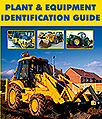
  • Material.  TER sends out Plant & Equipment Identification Guides detailing equipment identification locations, targeting and threat information.  We also provide posters, contact cards, newsletters, and the annual TER Equipment Theft Report.

Equipment identification assistance.  TER will assist officers 24/7 with the identification of plant and equipment.  TER operators will talk officers around the equipment if they cannot find the data or are unfamiliar with the equipment.  Then the operator will check the data against a number of sources to confirm the status (owned or stolen) of the equipment.

Specialist Plant Investigators.  TER runs a network of part-time, self-employed Specialist Plant Investigators who can deploy on police operations to identify equipment encountered during those operations.  The Investigator will also provide the police with statements and photographs, and will testify in court where required.  If you have lengthy experience with the identification of the full range of plant and equipment, and you would be interested in working for TER on a pert-time, self-employed basis, please forward you CV for consideration to info@ter-europe.org

Intelligence.  TER operates the i2 intelligence collation system - also operated by police Force Intelligence Bureaux.  Where appropriate TER will share intelligence product with police forces to initiate and progress investigations.

Police equipment theft data.  TER receives data on equipment theft from the Police National Computer (PNC) every month.  Most of the data requires cleansing to correct it, some has to be discarded because the data is inadequate, and a small proportion can be loaded directly into TER’s database.  TER will also advise police PNC Bureau operators on the validity of plant and equipment data prior to entry onto the PNC.

EQUIPMENT SALES

TER will sell recovered stolen equipment on behalf of owners, including equipment which TER has not identified or recovered.  TER sell through advertisements placed in the trade press and via a substantial list of known used equipment purchasers.  Equipment is sold by offer process, and generally the highest offer will win the equipment.  Terms and conditions of sale are available on TER’s website.

CRIME REDUCTION ADVICE

Loss Prevention and Security Techniques for Equipment Owners and Hirers.  TER has placed this document as a free download on our website.  This 18 page e-booklet is packed with loads of sensible advice aimed at reducing your vulnerability to equipment theft.

Decals.  Where equipment is registered with TER by an owner or a manufacturer, it can be marked up a TER warning decal, and/or a TER ‘Police Stop Me’ decal.  This is a high visibility decal that invites the police to stop the equipment if they see it moving between 2000hrs and 0500 hrs.